
Announcement: giving.sg is undergoing scheduled maintenance downtime until 28 Feb 2026. For enquiries, please contact [email protected].
Announcement: Lorem ipsum dolor sit amet consectetur. At leo non in lobortis faucibus aenean aliquam morbi. In neque orci aliquam consequat massa. Vitae aliquam scelerisque erat faucibus. Volutpat sem mattis velit sagittis vel
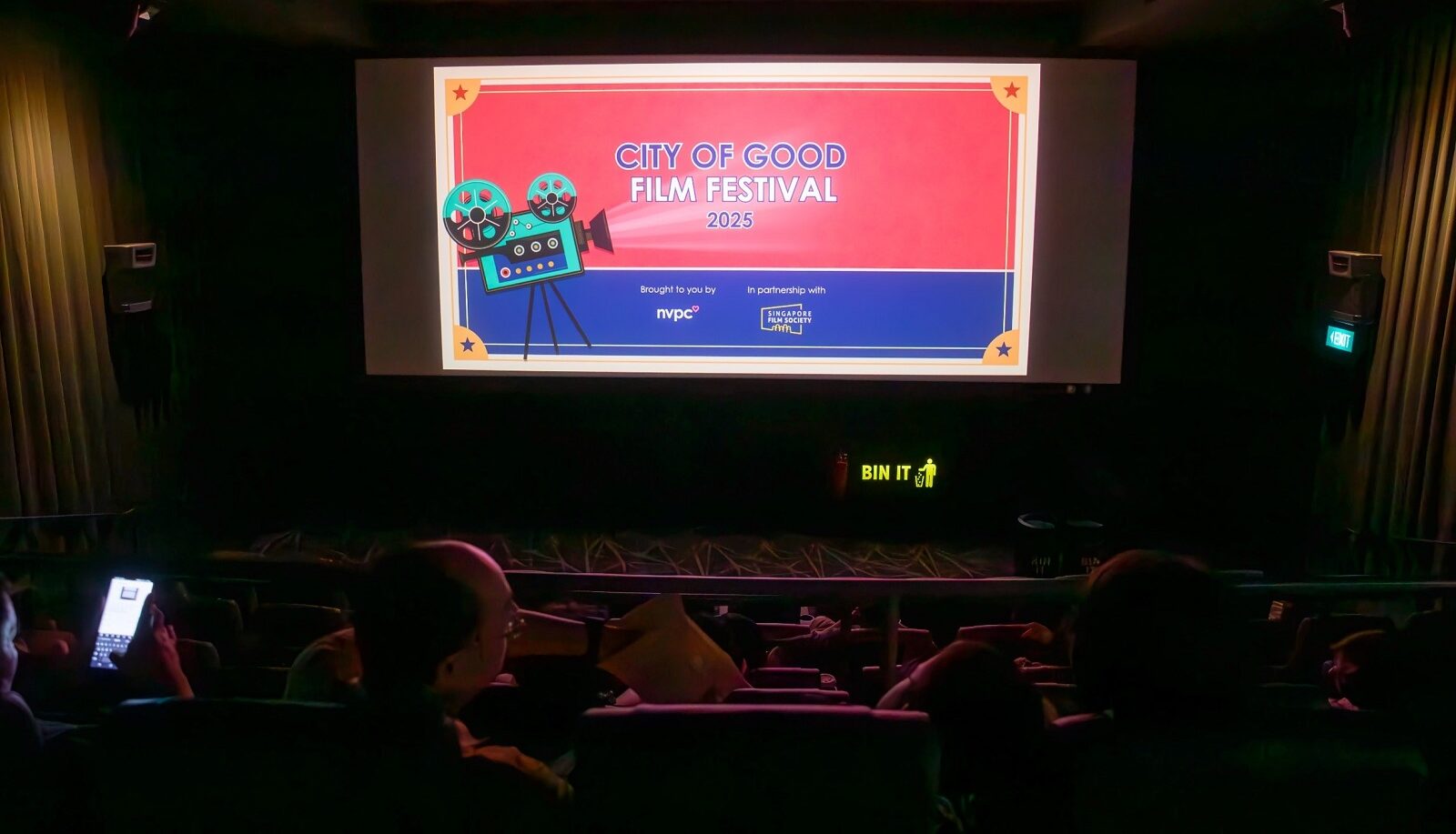
The first weekend of the 2025 City of Good Film Festival celebrated films that explored care, compassion, inclusion, and the power of giving and purpose.
Yukiko a.k.a. followed a shy teacher who finds her voice through rap and learns to live authentically. She showed that giving time, empathy, and passion can help us connect deeply with others—transforming both lives and communities.
Winners (supported by the Goethe-Institut e.V.) told the story of a Syrian girl Mona who finds courage and friendship through football in a new country. She finds her place by participating, not isolating—using her talent to connect, contribute, and uplift her team.
Middletown spotlighted youth uncovering an environmental crisis. Through making their film, these youth learned the power of collaboration, civic engagement, and protecting their community. The film was followed by a panel discussion which drew connections between individual action, media influence, and civic engagement. Titled “From Footprints to Action – How Individuals Can Drive Environmental Change” the post-screening panel was hosted by Serene Chen, NVPC’s Deputy Director of Marketing & Communications. Panellists Kenneth Tan, Chairman of Singapore Film Society and Gerald Wong, Executive Director at EB Impact, shared their thoughts on how storytelling can move people from awareness to action.
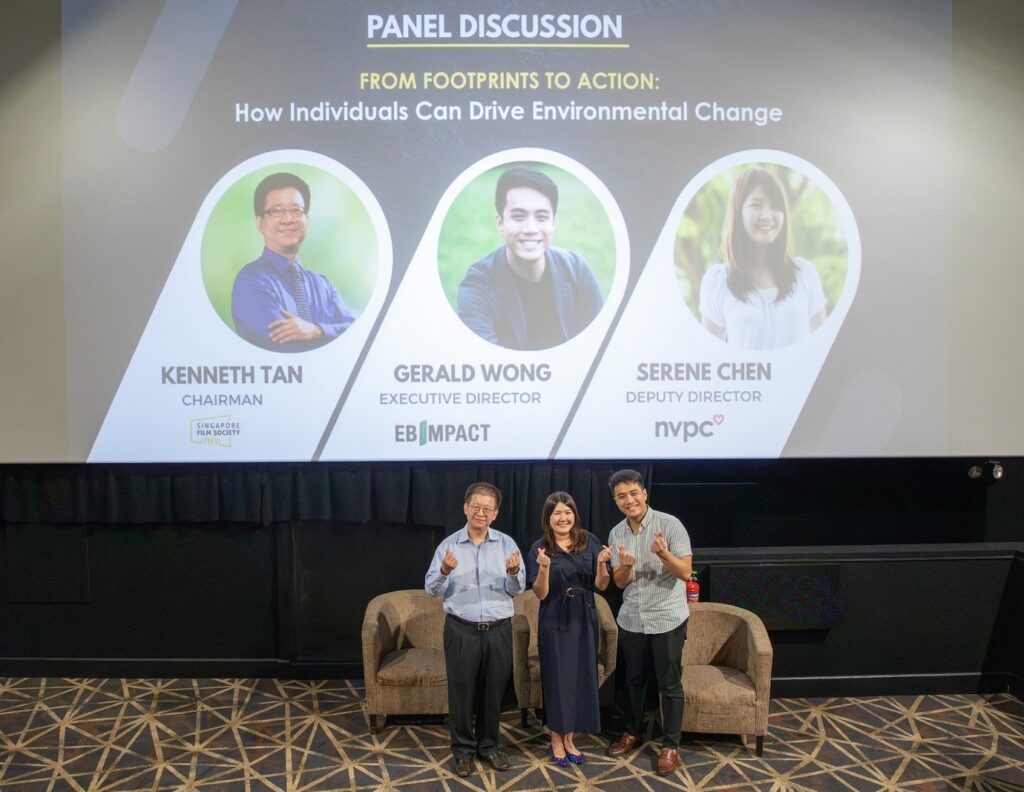
“Movies entertain—but they also inform and provoke,” said Kenneth. “A film like Middletown is not fiction. These are real people, real consequences. That emotional resonance is powerful.”
Serene echoed that sentiment, referencing an article which reported that witnessing kindness—whether on screen or online—can trigger a moral response in viewers. “Kindness is contagious,” she said. “If a story is told well, it can inspire action.”
That inspiration, however, often depends on the authenticity and emotional impact of the narrative. As Kenneth pointed out, “When you know something is real—not acted, not dramatised—it moves you more deeply.”
Despite increasing awareness around sustainability, giving to environmental causes remains modest in Singapore. According to NVPC’s National Giving Study, donations to sustainability efforts have grown, but still make up just a small percentage of total philanthropic giving.
Gerald Wong, Executive Director of EB Impact, believes one key reason is that climate action does not yield immediate results. “People feel they won’t live to see the impact of their donations,” he shared. “But the urgency is real. We need to invest now to preserve the future.”
Kenneth believes that intrinsic motivation can be just as powerful as visible outcomes. He shared a personal story of his wife buying cakes for two migrant workers at a cake shop. “There was no way to expect anything back. But she was smiling for the rest of the day.”
This sense of internal reward—of doing good simply because it feels right—is something the panellists agreed is often overlooked but deeply meaningful.
While philanthropy is one form of impact, everyday choices matter too. “Our National Giving Study showed that 56% of respondents deliberately avoided products that were unethical or unsustainable,” said Serene. “Small decisions, when multiplied, can lead to big change.”
Gerald acknowledged the tension between idealism and practicality. “Many environmentally friendly products cost more or require more effort to use. Change isn’t easy when people are used to a certain way of life.”
Yet solutions do exist—and they don’t always need to come from top-down policies. Gerald shared a story of primary school students who built a prototype to simplify aluminium can recycling. “They identified a pain point—people didn’t want to wash cans before recycling, so they addressed it.”
Kenneth highlighted another example of a “happy stick” approach at the Singapore Institute of Technology (SIT), where one food court has completely eliminated disposable items entirely. “If you want to take away food, you must bring your own container. There’s no punishment—just a system that encourages the right behaviour.”
Sometimes, subtle nudges in the environment are more effective than the usage of a stick.
At its core, the discussion circled back to the role of storytelling in inspiring action.
“Stories force us to reflect on how we connect and share,” said Kenneth. “They turn abstract ideas—like climate change—into something human and real.” A powerful story can turn disengaged bystanders into passionate advocates, especially when it highlights agency and possibility.
EB Impact applies these principles to programme design. Gerald shared about Seeds of Change, an initiative that brings sustainability into active ageing centres by transforming them into community cafes run by seniors. “We’re integrating active ageing with environmental awareness,” he said. “It’s about making sustainability relevant—across generations.”
As Singapore marks SG60, Serene posed a closing question: What do you hope the current generation leaves for the next?
Gerald’s answer was simple yet profound: “A world to live in.”
Kenneth added, “There’s so much information out there. My hope is that we help the next generation use it wisely—for the greater good.”
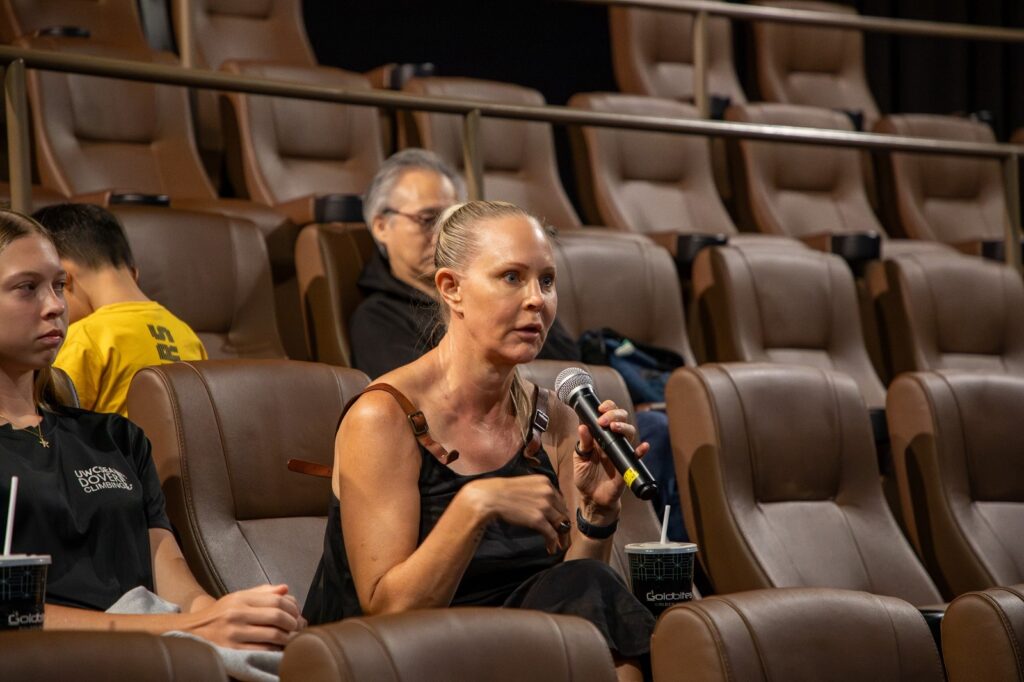
During the audience Q&A, a participant raised a thought-provoking point: Some of the most impactful documentaries—like Seaspiracy—are difficult to watch. How can filmmakers and advocates encourage people to engage, even when the content is uncomfortable?
Kenneth shared a story from the Covid-19 pandemic years, when people still attended curated film screenings despite safety restrictions. “One attendee told me, ‘If someone has thought about this enough to share it with others, then I know it’s worth watching.’”
His takeaway? Accessibility and intention matter. Films become more powerful when framed within community discussions or shared experiences. Serene agreed, noting that repeated exposure and early education can help “normalise” complex topics like climate change. “You can’t make it an esoteric topic that’s challenging to act on. Start with one thing—then two, then three.”
During the audience Q&A, a participant raised a thought-provoking point: Some of the most impactful documentaries—like Seaspiracy—are difficult to watch. How can filmmakers and advocates encourage people to engage, even when the content is uncomfortable?
Kenneth shared a story from the Covid-19 pandemic years, when people still attended curated film screenings despite safety restrictions. “One attendee told me, ‘If someone has thought about this enough to share it with others, then I know it’s worth watching.’”
His takeaway? Accessibility and intention matter. Films become more powerful when framed within community discussions or shared experiences. Serene agreed, noting that repeated exposure and early education can help “normalise” complex topics like climate change. “You can’t make it an esoteric topic that’s challenging to act on. Start with one thing—then two, then three.”
As the panel wrapped up, Gerald offered a final reflection: “If we want to spark action, we must first make the topic accessible. Relevance and relatability open the door to participation.”

Whether through stories, actions, or donations, one thing was clear: change starts with individuals—but it scales through community.
This panel was part of the City of Good Film Festival, organised by the National Volunteer & Philanthropy Centre and Singapore Film Society. To explore ways to give or volunteer, visit giving.sg.