
Announcement: giving.sg is undergoing scheduled maintenance downtime until 28 Feb 2026. For enquiries, please contact [email protected].
Announcement: Lorem ipsum dolor sit amet consectetur. At leo non in lobortis faucibus aenean aliquam morbi. In neque orci aliquam consequat massa. Vitae aliquam scelerisque erat faucibus. Volutpat sem mattis velit sagittis vel
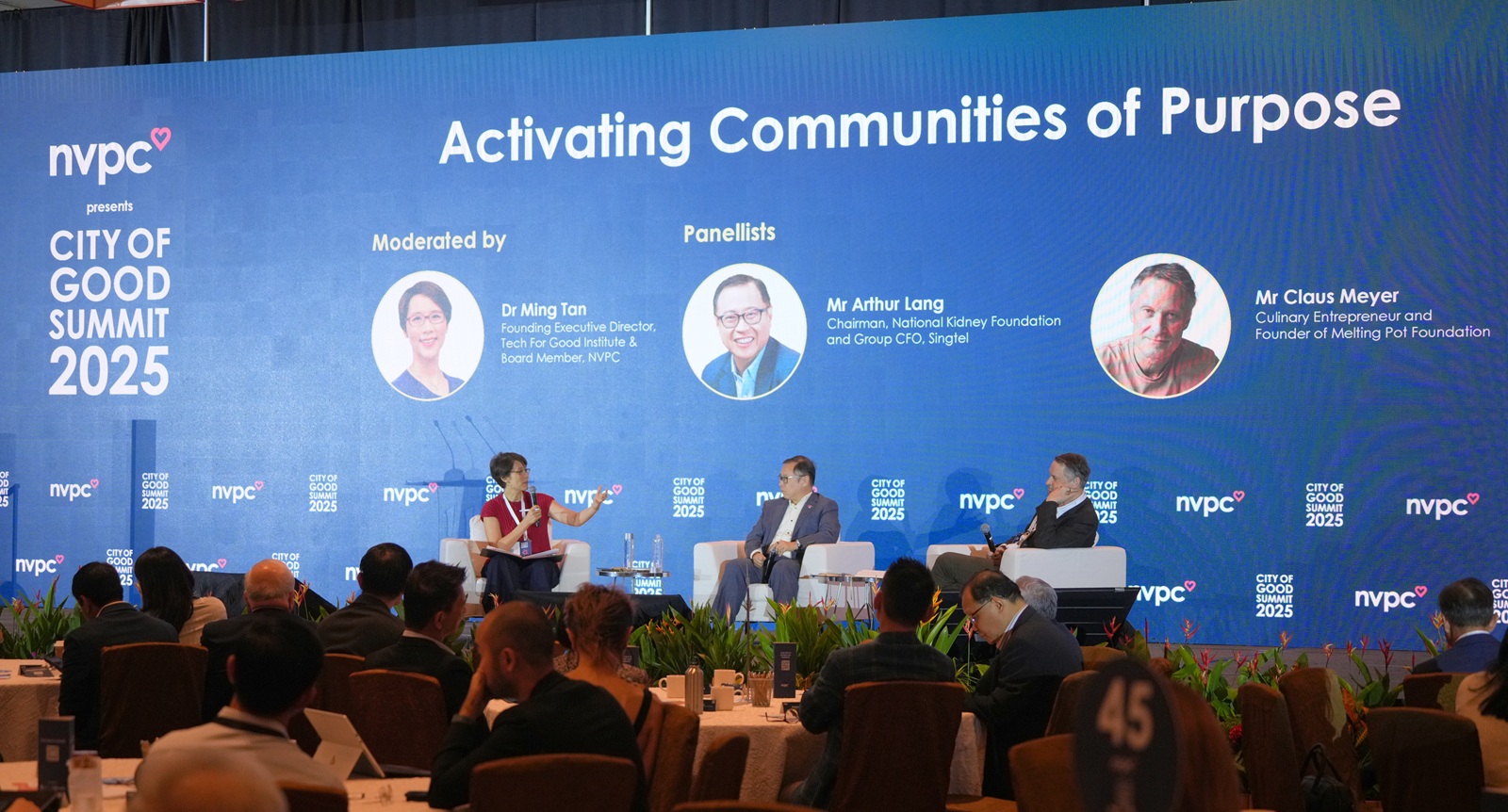
At the City of Good Summit 2025, Dr Ming Tan, NVPC Board Member, hosted a panel discussion on ‘Activating Communities of Purpose’. Panellists Claus Meyer — culinary entrepreneur and co-founder of the Melting Pot Foundation, and Arthur Lang — Group CFO of Singtel and former Chairman of NKF — unpacked the transformative power of innovation when rooted in empathy, purpose, and a multi-stakeholder mindset.
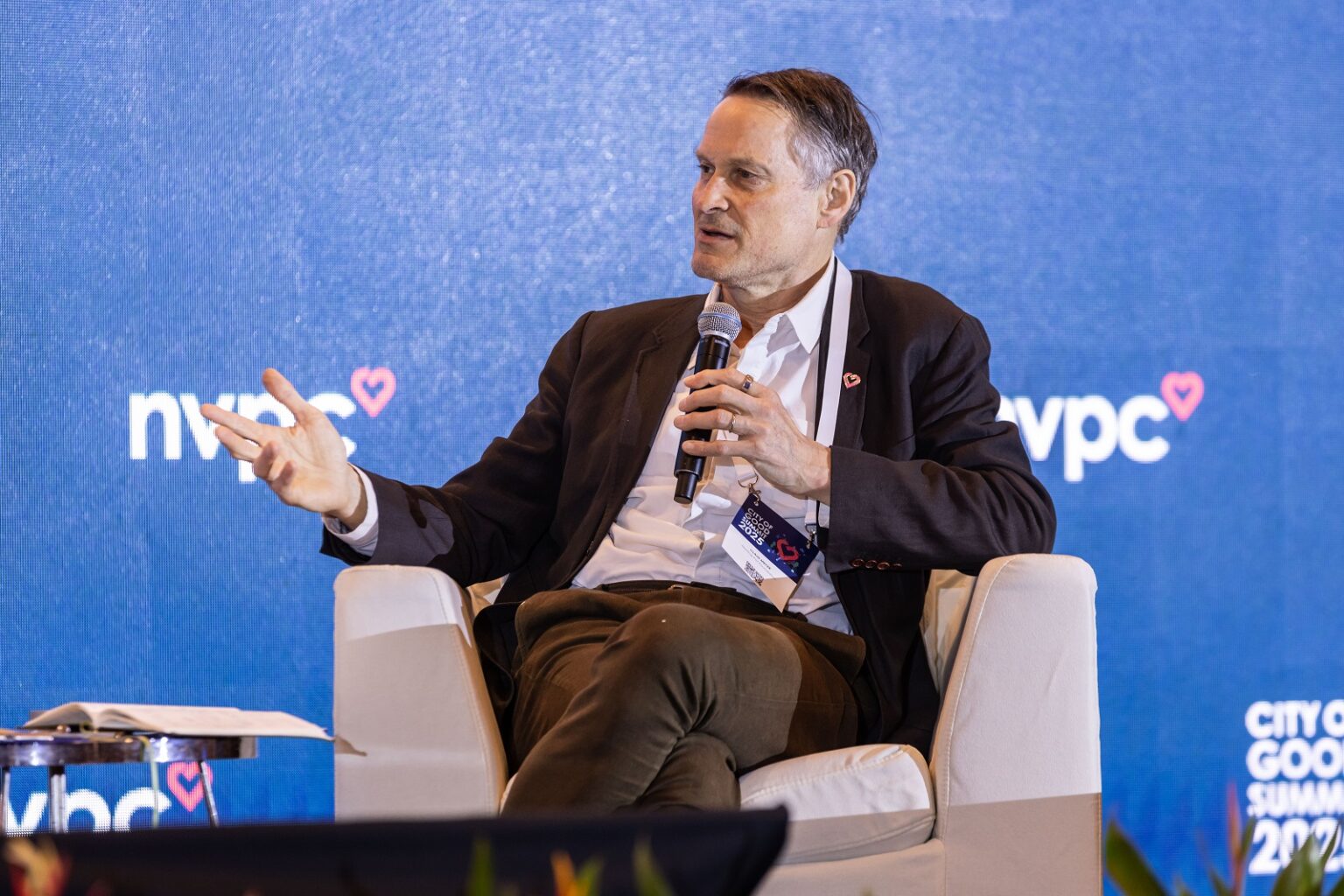
“If you have more than you need, build a longer table, not a higher wall.”
Claus shared how business strategy and systems change can be complementary forces for good. Charting the beginnings of the New Nordic Cuisine movement as an example, he explained how the motivation was not merely to promote a restaurant or even changing what people ate, but about redefining national identity through food.
While the restaurant industry was revitalised as a result, Claus candidly acknowledged that shifting everyday eating habits remains a challenge. His latest mission is to reconnect people with cooking by turning homes, schools, and corporate kitchens into spaces for culinary learning and social connection. In Denmark, where fast food dominates outside the home, food literacy is not just about health – it’s about reclaiming agency and community.
Using chefs and restauranteurs as examples, Claus reflected on the responsibility of professions to contribute beyond their organisations and even industries to serve society as a whole. Chefs, for example, had a role beyond serving delicious food, but could influence how food cultures and food systems.
He aimed to promote “sustainable hedonism” – food that is both delicious and responsible – and to position chefs as societal role models and agents of change who support healthier, more sustainable food systems.
If you have more than you need, build a longer table, not a higher wall.
Claus shared how business strategy and systems change can be complementary forces for good. Charting the beginnings of the New Nordic Cuisine movement as an example, he explained how the motivation was not merely to promote a restaurant or even changing what people ate, but about redefining national identity through food.
While the restaurant industry was revitalised as a result, Claus candidly acknowledged that shifting everyday eating habits remains a challenge. His latest mission is to reconnect people with cooking by turning homes, schools, and corporate kitchens into spaces for culinary learning and social connection. In Denmark, where fast food dominates outside the home, food literacy is not just about health – it’s about reclaiming agency and community.
Using chefs and restauranteurs as examples, Claus reflected on the responsibility of professions to contribute beyond their organisations and even industries to serve society as a whole. Chefs, for example, had a role beyond serving delicious food, but could influence how food cultures and food systems.
He aimed to promote “sustainable hedonism” – food that is both delicious and responsible – and to position chefs as societal role models and agents of change who support healthier, more sustainable food systems.
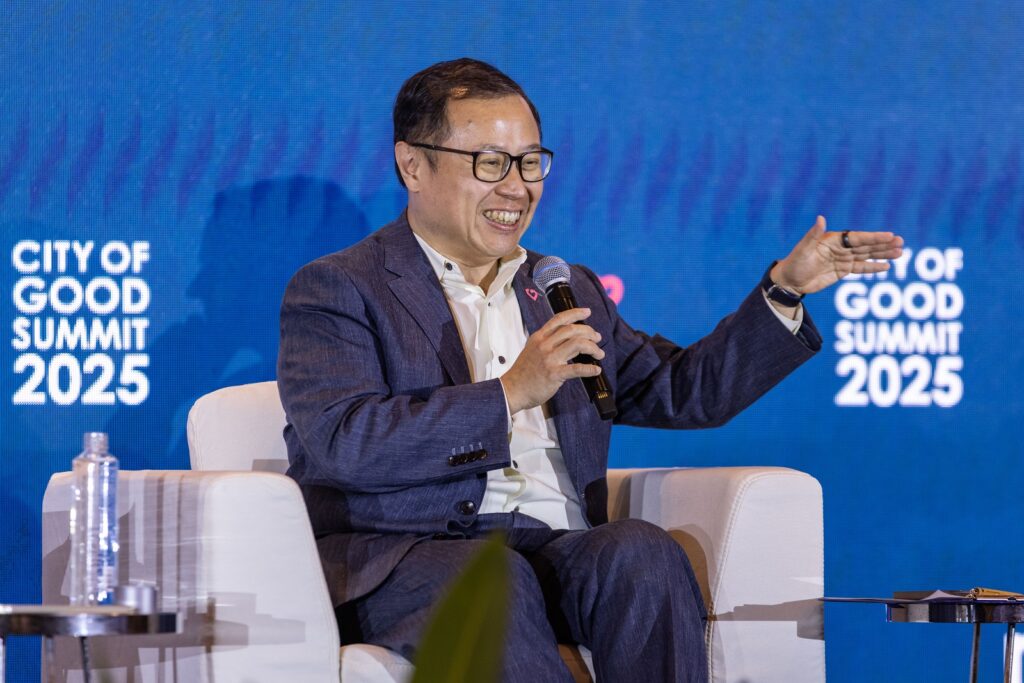
Arthur shared how digital innovation can unlock access for underserved communities. Using the example of GXS Bank, a digital bank joint venture between Singtel and Grab, he explained how unconventional data – such as daily order flow and payment signals – can serve as proxies for creditworthiness. This approach has enabled the extension of micro-loans to small businesses previously overlooked by traditional banks.
He also drew upon his experience at NKF to highlight the importance of combining social and technical innovation. Ultrasound for vein detection significantly improved the patient experience, while plastic needles improved comfort for overnight dialysis sessions, enabling patients to return to work and regain agency in their lives.
When asked how leaders can inspire their teams to care beyond their job scopes, both panellists stressed the importance of shared vision and authenticity.
For Claus, shared vision starts with radical challenges and stepping outside one’s comfort zone. Instead of looking to do a good job, he reframed the challenge as “With the network and resources that we have … what is the most incredible contribution we can make to society?” This reframing shifts focus from incremental improvement to meaningful transformation.
Arthur echoed the sentiment, stressing the importance of clear, purpose-driven communication and authentic leadership. “People can sense when a leader truly believes in the cause,” Arthur said. “That’s when culture sticks, even after someone leaves the organisation.”
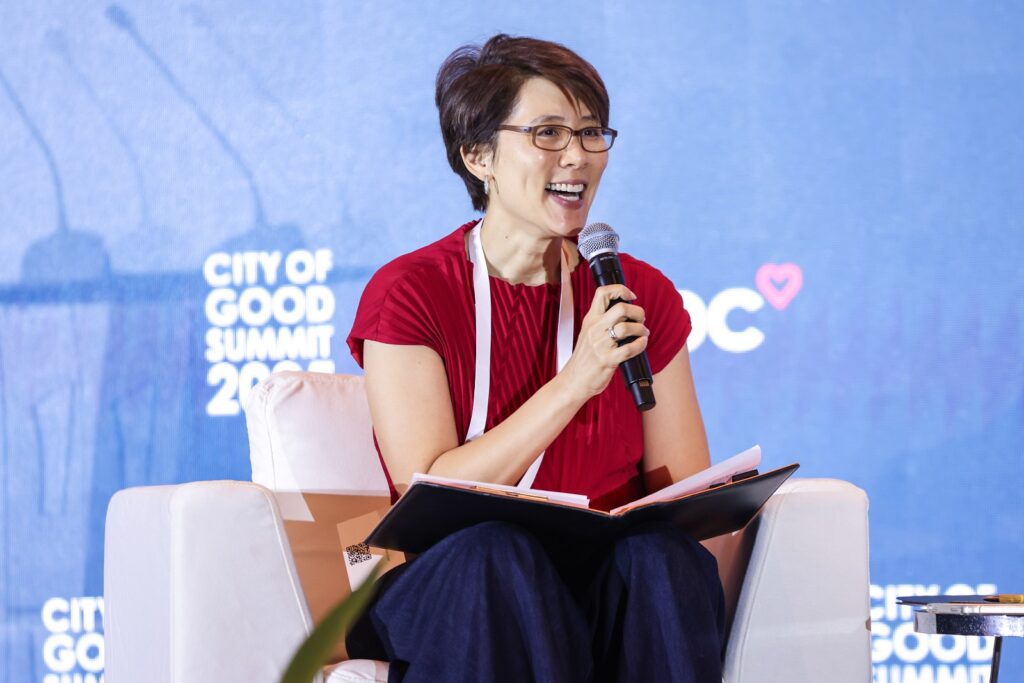
Dr Tan closed the panel to summarise how professional communities of all stripes beyond finance and food can support broader purpose, practice, and partnerships. Whether a chef, finance manager, tech innovator or community builder, the future needs thinkers and doers with domain expertise and willingness to collaborate across sectors and co-create solutions that are greater than the sum of their parts.
As Singapore turns 60 this year, the conversation was a timely reminder: the next generation must build a City of Good not only with skill, but also with heart.