
Announcement: giving.sg is undergoing scheduled maintenance downtime until 28 Feb 2026. For enquiries, please contact [email protected].
Announcement: Lorem ipsum dolor sit amet consectetur. At leo non in lobortis faucibus aenean aliquam morbi. In neque orci aliquam consequat massa. Vitae aliquam scelerisque erat faucibus. Volutpat sem mattis velit sagittis vel
We thrive in meaningful relationships, and community is the context where we give and receive. Everyone is wired and inspired differently, and no single person has it all figured out. We’re better together. It is in doing life with others that we become our best selves. We play different roles in society that are complementary to one another.
When everyone takes ownership of their respective parts and leverages shared strengths, we can inspire positive change, imagine new solutions, and resolve issues within and beyond our communities. Our collective impact as an empowered and collaborative community is incredible. Hand in hand, we make the difference we want to see in our world.
Together, we build a City of Good.
Consider your usual routine. (Or at least, the way it used to be before Covid-19.)
Maybe you have breakfast at home or grab a quick bite at a kopitiam. You commute to work or school. At night, you go to a recreation centre to exercise or to a library to work on projects. You catch up on conversations in several online groups and chat rooms. During weekends, you take your family to the park, play sports with your friends, join meetups, or attend an event or a church service.
In each activity, you are participating in and shaping a community, whether or not you see it that way. You might even play a major role in building or guiding the community.
The reality is that all of us belong to at least one community. In a seemingly individualistic society like Singapore, you might not feel this – but it’s true. And the things you do every day can influence these different communities.
On the other hand, you may be conscious of the fact that communities exist wherever you go. But ever wondered what exactly a community is – and how you can contribute?
You’ve come to the right place.
Whether you’re a community member or consider yourself a community developer, it’s important to build a consciousness of the different types of communities around you, what these communities comprise, and the various possible ways you can contribute to them.
We’ll be discussing these in a series of articles, which are based on conversations we’ve had with the developers of various types of communities around Singapore.
But first, a note—this series aims to help you think about communities. It will give you ideas and perspectives on building, assessing, or improving a community. It won’t give you a prescriptive answer on how to develop and solve your specific community’s problems, because every group of people—along with the interests, causes, and problems that bind them together—is unique.
With that said, let’s begin.
Community can seem like an abstract concept, when actually, it is manifested in tangible, physical ways. It fulfils the basic human desire to be part of something beyond ourselves, as well as to feel a sense of ownership by contributing to the creation and growth of communities. Communities can be characterised via different scales, and may be intentional or organic.
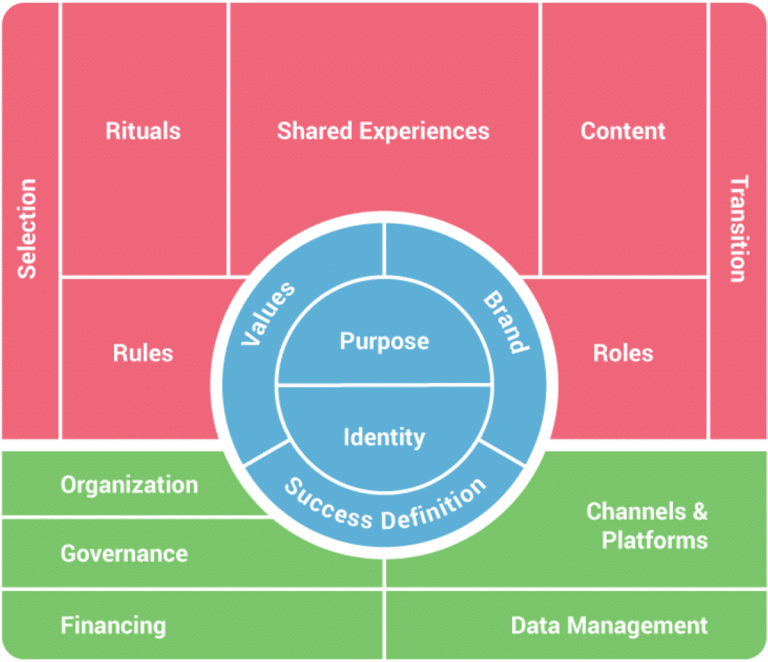
The Community Canvas framework is a popular model that was created to help people think about community building. It divides the experience of community life into 17 themes, and emphasises two main purposes of communities – internal & external.
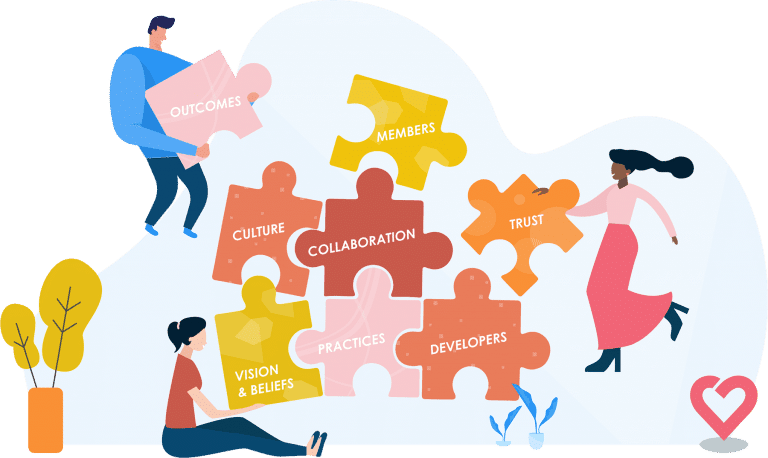
Read on to learn about the 8 key components of communities that NVPC has identified through in-depth discussions with community developers across Singapore.
We observed 7 different perspectives that Singaporean community leaders take for community building. While these aren’t the only perspectives out there, they’re diverse enough to provide you with a starting point for your own approach to community building.
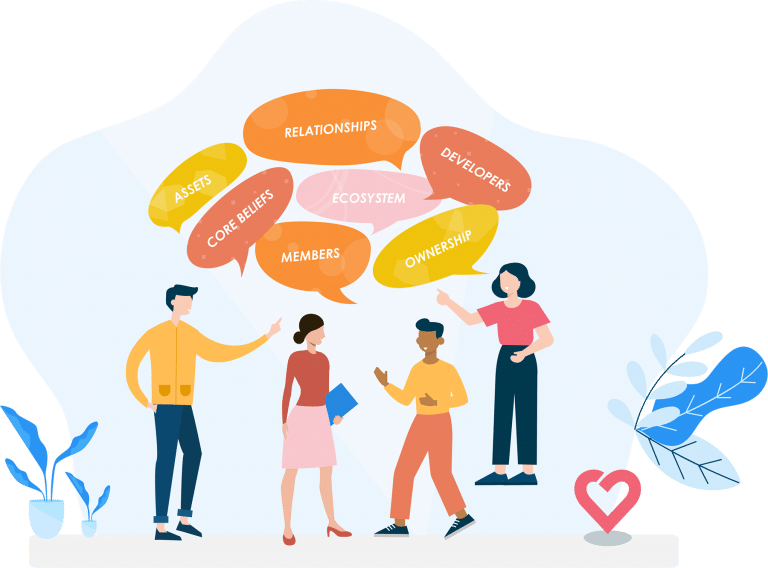
Take the first steps to build a community or become a more active member.
As a community member or developer who wants to take on a more active role, the first step is to challenge your preconceived notions of community.
You can do that by identifying and analysing each component of your community. And then considering the different perspectives to community building and gauging how each could be applied to your community.
Engaging with and building a community is a journey that lasts a lifetime. Even if you exit one community now, you’ll end up entering another—unless you live all alone in an undiscovered cave or have been stranded alone on an island for 48 years (in which case you wouldn’t be reading this!).
Here are some next steps we suggest:
The concept of community is complex. Communities can be as broad as an ecosystem-wide organisation for social development, or as simple as a Facebook community page for bookworms to share their thoughts.
They can have an internal or external purpose, or even both.
Communities are made up of people with varying perspectives, identities, and attitudes towards how things should be done within the community or what direction the community should be headed towards. Communities can even exist on different scales, with sub-communities existing within a larger one.
With so many variations and moving parts, how can communities function in a way that’s both purposeful and organised?
This is where developers come in.
Community developers, or simply “developers”, are seen as a key pillar to community development. They may not have a formal title, but play a role in steering the community in the desired direction, based on the community’s vision and purpose.
But to properly define a community developer’s role is as complex as defining communities themselves. Each community has its own unique nature, purpose, and members, which all contribute to the overall task of the developer.
Developers themselves view their role from various perspectives. Some may take an ecosystem-wide approach, while others may take a more member-centric perspective. This may also be shaped by the sector in which the community exists such as in the social or commercial space.
To better understand the role of developers within different communities, we talked to several community developers in Singapore to get their personal insight on their role and will discuss three themes in this article:
As expected, community developers refer to themselves and the work they do differently. There was no one job description or term they could agree upon, as each term held different meanings, connotations, and associations based within the context they’re applied to.
Bee Leng, a developer from local charity AMKFSC Community Services, even said that she preferred using “new names” to help people think about their roles differently.
Some referred to their roles as “facilitators”, “animators”, or “alongsiders”. One even described developers as “octopi”—people who are doing a million things at once.
To grasp this terminology, let’s take a closer look at how developers view their responsibilities:
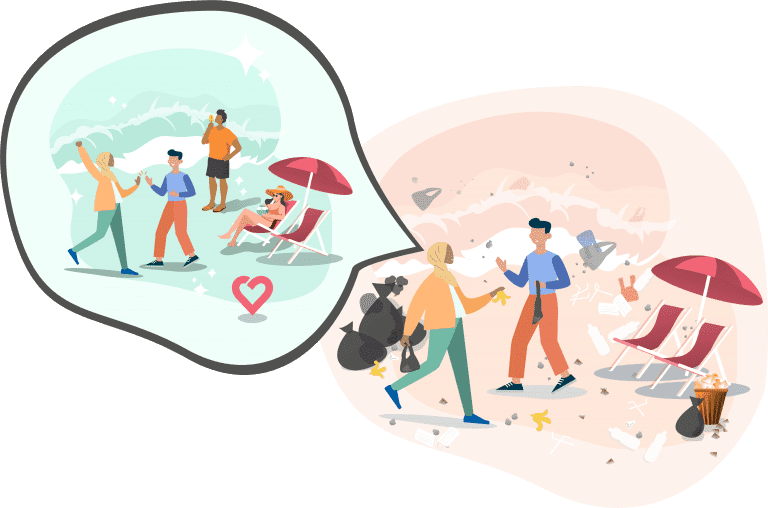
Some developers described their role within the community as one that helps members expand their capacity to aspire beyond existing scopes and situations.
One developer used the term “painter” to describe this role to illustrate painting a big picture—or one that is larger than the current boundaries of the community. The painter sees possibilities that members might not otherwise see or dream of, and through thoughtful facilitating, guides the brush strokes to realise that painting.
Another used the term “innovator”, to convey their role as a designer of a community that learns together so members are empowered by their knowledge to increase their capabilities beyond what was perceived.
Similarly, there were developers who described their role as enabling their members to achieve their goals through capacity building or providing opportunities that allow them to do so.
A “capacity builder” builds the skills, confidence, and expertise of members to achieve their goals. Meanwhile, “enablers” or “catalysts” are those that empower members within the community to use their individual strengths to do good within their community and pursue the goals and causes they care about.
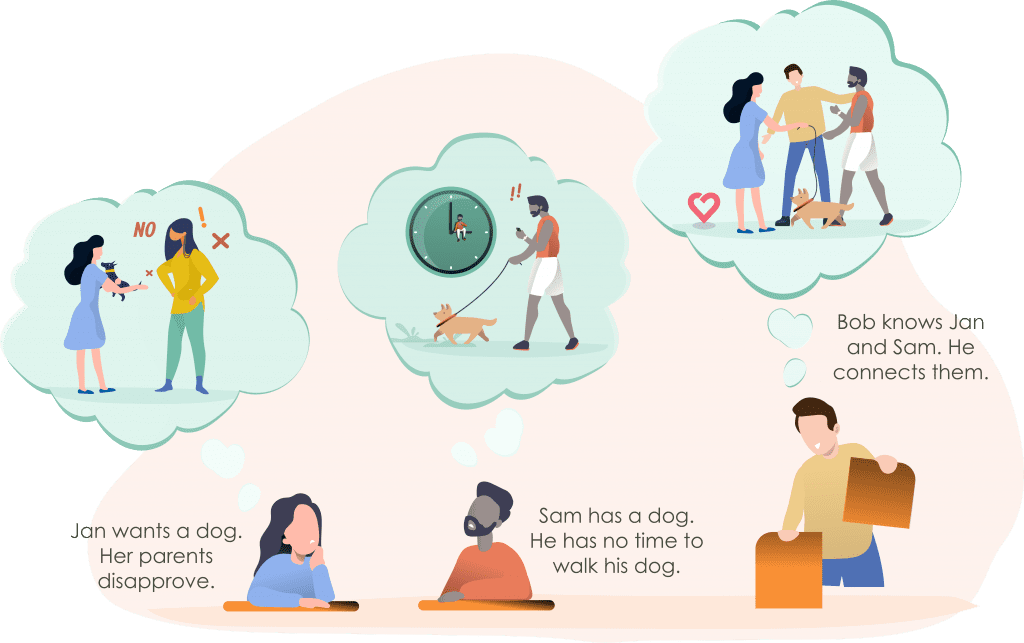
Several developers described their role as a “bridge” or “connector”, discovering assets and strengths in and beyond the community, and linking these assets to those who need it. Members of the community can be “bridges” and “connectors” as well.
Another developer described their role as a “treasure hunter” as they find treasures (like skills, resources, and opportunities) within (e.g. volunteers) and outside (e.g. partnerships) the community where they might not be so obvious.

One community developer described his role in the community as being an “octopus” because of the many roles developers play, including cheerleader, safety net, signpost, historian, mirror, and architect. In this perspective, developers wear many hats as many things need to be done in different facets of a community.
One described the developer’s role as “Kaypoh”, a colloquial term used to describe a nosy person. Developers need to make an effort to learn about the lives of other members to help them create lasting internal changes throughout their stay in the community. Journeying with members and building relationships help keep the community together.
Another developer referred to his role as an “explorer”, as he “digs around” to get to know members better, listening to them and understanding what they are passionate about. In effect, he builds relationships with them too.
A developer expressed unease with the word “developer” as it implied that their role was to build something new when in some contexts, communities preexist and any outcomes were the result of previous member interactions.
He suggested the term “animator” as a more appropriate term to highlight the role that developers play in bringing a community to life. The animator shows up collaboratively and enables, supports, and facilitates; shifting the power of developing the community to its members.
Another developer described his role as a “contributor”, emphasising the fact that everyone contributes to the community in his or her own way, and the developer is simply one of the many contributors in the group. In this sense, contributors focus on the needs of the individual rather than the institution.
Though, in some cases, communities do not necessarily need the help of the developer. If a developer is not wary of this, “intruding” in that community could potentially “kill their spirit”.
There are developers who play dual roles—one as a professional and the other as a community developer. Developers who have to wear professional hats shared that they could not “run away” from this identity as members saw them as professionals and held expectations for these developers to provide solutions for their immediate needs.
These expectations create a barrier, preventing developers from playing other potentially personal roles in the community.
What are the roles of a developer in your community?
How are the roles of a developer similar to or different from the roles of a member?
With all that said, is there any point in trying to define a developer’s role?
While all the developers saw their role as something unique to their community, they agreed on a number of things they believed a community developer is not.
A community developer can be a “leader”, but not in the sense that implies hierarchy and power; as if the developer were the sole decision-maker of the community and members are disempowered to act. Neither is a developer someone who has “control” over the community and can intervene and veto decisions whenever he or she pleases.
Rather, a community developer can be seen as a servant leader—someone who serves rather than controls. An “animator”, “facilitator”, or “alongsider”, or simply put someone who brings the community to life; someone who gently “prods” and “suggests” rather than makes all the decisions.
A developer must be comfortable with ambiguity and willing to have “incomplete control” whilst watching over the community. Furthermore, the developer must acknowledge that communities may already be present and not necessarily “built.”
Community developers exist because it’s difficult for communities to grow organically without any direction. There is an abundance of diversity within communities, and developers must bring the focus to the similarities—to the shared vision, purpose, and goal of the overarching community.
In no way does the developer “own” the community. In fact, many developers hope to someday exit the community. If he or she owns the community, then the community will be lost upon the developer’s exit.
Through intentional facilitation, developers can instead create a sense of ownership among members and encourage them to take leadership roles within the community. In that way, developers are also cultivating future developers from within the community.
Member development journeys can guide developers in creating that sense of ownership. This includes:
These rules and guidelines provide structure and reinforce the values of the community.
Who are some community developers you admire?
What can you learn from them?
At the end of the day, the role of a developer is a broad one that serves to reflect the goals of the community as a whole. While they go by many names, developers need to give space for communities to realise their own potential and take a back seat when community members step up, allowing the community to come up with solutions and bring new people into the community as well.
Community members are certainly not just beneficiaries of the community, they are part of what makes the community alive. They may require some guidance from the developer at first, but they may also find it in themselves to become developers themselves.
With that said, anybody can be a developer! Just take note of some of the qualities that would be helpful to have:
These rules and guidelines provide structure and reinforce the values of the community.
Who are some community developers you admire?
What can you learn from them?
Culture can make a community member decide whether to stay or leave. It can help them achieve their vision or hold them back constantly. It also affects the way members see themselves within the community.
Yet for all its influence and importance, many of us are hardly aware of how we practice, form, and spread our culture.
Students of culture like to ask: “Do fish know they’re in the water?” The idea is that we are so immersed in our culture, we are barely conscious of how it influences our every word and action.
Some people don’t like this metaphor—but they don’t necessarily disagree with its point. Try to recall how many times you’ve asked a question and the answer was a blank stare and the feeble explanation: “Because we’ve always done it that way”?
As a community developer or active member, we’re betting that’s not the type of statement you’d want to make when talking about culture. You’d rather have an answer with more self-awareness, just like fish becoming “aware of the water in which it swims”.
We hope this piece will help you think critically about culture within communities and inspire you to shape your community’s culture for the better.
We gathered developers from various types of communities in Singapore and asked them to talk about culture within their communities.
These developers agreed that culture is the most important aspect of why people enter and participate in a community. That means culture can make people decide to quit a community as well.
Consider, for example, how many employees leave companies because of “toxic cultures”. A majority (95%) of human resource leaders say burnout causes employees to quit.
Or try to remember the last time you thought of moving to a different neighbourhood. Aside from the price of rent, you probably evaluated people’s lifestyles and the area’s physical attributes, and how these fit into your personality and aspirations.
Finally, think about how you ended up becoming a developer or active member in a certain community. You may have joined for different reasons, but what motivates you to stay? Do you feel that you belong?
If so, you have culture to thank for that.
Culture is learned, shared, and symbol-based. It is dynamic, and is integrated into every aspect of community life. This section examines culture in the context of communities.

Community leaders grapple with cultural tensions all the time. Read more about some tensions you may identify with, and how developers in Singapore view or respond to them.
As it affects all aspects of our lives, culture is a very complex web to trace. And parts of it can change slightly everyday, whether it’s caused by external forces (see: The Rona) or by internal events and relationships.
It’s impossible to keep a culture “under control”—and you shouldn’t even try. While you can reinforce your community’s culture through stories, experiences, physical symbols, and shared values and goals, you need to embrace its complexity and dynamism. As one Singaporean developer pointed out: “Magic is in the mess.”
Instead, allow trust between people in the community to uphold and preserve the best parts of your culture, and to transform it when the need arises. By focusing on building trust, you can take a step back and see the community growing and gaining strength on its own.
If you’re interested in learning more about how to understand and measure success in your community, read on to our next chapter: Defining Success within Communities.
Introducing change to a community’s culture can feel like an uphill battle. There’s one crucial element that every community needs to enable cultural shifts.
What does a “successful community” look like?
For some people, it means having a safe space where they can share a common purpose and values with like-minded individuals—think of a group of board game enthusiasts who play a couple of rounds of Dungeons & Dragons on weekends. For others, it’s about having healthy and diverse participation under good leadership. You can see this in professional societies and civic groups in Singapore. These examples underscore the fact that community success is a fluid concept—one with many faces depending on your community.
Whatever the case, it’s clear that defining the success of a community ultimately rests in the hands of its members and key stakeholders (more on this later). If you’re a community developer, your challenge is to figure out what goals and objectives your community should achieve for it to be “successful.”
Generally speaking, there are two ways to go about doing this:
In this series of articles on defining community success, we’ll be talking about what the developers behind some of Singapore’s thriving communities think success means, why community success is so subjective, and how to measure success within your own communities.

Measuring community success is a complex issue. Some think success may be limiting. Community developers need to consider nuances and various perspectives when measuring success.
KPIs are helpful in measuring success, as long as they consider and represent the perspectives of various stakeholders.


If you’re unsure about how to engage your community to reveal information that you can measure, check out the ideas in this section.
At the end of the day, it’s important for developers to create metrics that allow them to keep track of the community’s growth and development as well as ensure that the community is heading in the right direction, depending on its core goals.
However, it’s also important to remember that the nature of community work is fluid—communities can form and collapse spontaneously, and people will come and go. The clarity in community work is always evolving and the “right” thing to do will change at some point or another.
Bottom line? There is no singular definition of success and the definition of success agreed upon should be flexible enough to adapt.
If this is the first piece you’re reading from the Community Matters series, we hope that you gained some fresh perspectives that broadened your views on community. Do have a read of the other resources on community components such as Community 101, Developers, Members, and Culture.
You may wish to learn from how others in Singapore are nurturing their various communities.
Wishing you all the best in your community development journey!